





With heat pumps becoming the future of home heating across the UK, many homeowners in Northern Ireland are asking the same question:
“Can I install a heat pump in my home?”
The real question is slightly different:
“Is my home ready for a heat pump?”
Because the success of a heat pump does not start with the unit itself — it starts with your building.
What Determines Heat Pump Suitability?
Heat pumps operate very differently from traditional oil or gas boilers.
- Boilers run at high temperatures (70–80°C)
- Heat pumps run at lower temperatures (typically 35–55°C)
This means your home must be able to retain heat efficiently.
If it cannot:
- The system will work harder
- Running costs will increase
- Comfort levels will reduce
Why Building Fabric Comes First
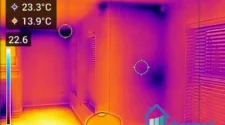
Before any heat pump is installed, it is essential to understand how your home loses heat.
Key areas include:
- Walls – solid or cavity construction and insulation levels
- Roof – loft insulation and sloped ceiling performance
- Floors – solid or suspended construction
- Windows and doors – glazing performance and air gaps
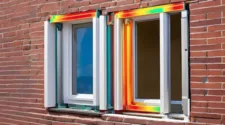
- Air leakage – draughts and uncontrolled ventilation
The industry approach is clear:
Fabric first, then heating system
The Key Metric: Heat Loss Parameter (HLP)
To assess whether a home is suitable for a heat pump, we use a key performance indicator known as the Heat Loss Parameter (HLP).
HLP measures how much heat your home loses relative to its size.
It is calculated as:
HLP = Heat Loss Coefficient (W/K) ÷ Floor Area (m²)
This calculation includes:
- Heat loss through walls, roof, floors, windows and doors
- Ventilation and air leakage losses
- Thermal bridging
What Is a “Good” HLP?
There is currently no fixed threshold for Northern Ireland, but the principle is straightforward:
- A high HLP means the home loses heat quickly
- A low HLP means the home retains heat efficiently
In practice:
- Older, uninsulated homes tend to have high heat loss and are often unsuitable without upgrades
- Homes with improved insulation and airtightness are better suited to heat pump systems
What Happens If You Skip This Step?
Installing a heat pump without properly assessing heat loss can lead to:
- Higher energy bills
- Poor comfort levels
- Oversized or inefficient systems
- Reduced long-term performance
EPC vs Real Performance
An EPC provides a useful overview of a property’s energy performance, but it has limitations.
An EPC:
- Uses standardised assumptions
- Provides a general rating
It does not:
- Provide detailed heat loss calculations
- Reflect real-world performance
- Confirm suitability for a heat pump
This is why a technical assessment is essential.
What Is a Heat Pump Readiness Assessment?
A Heat Pump Readiness Assessment provides a clear understanding of how your home actually performs.
It focuses on:
- Fabric heat loss
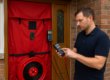
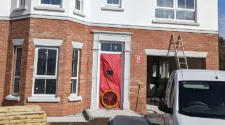
- Ventilation and air leakage
- Construction type and insulation levels
- Overall building performance using HLP-based analysis
What You Get From an Assessment
A proper assessment provides:
- Accurate heat loss calculations
- Identification of required upgrades
- Clear recommendation on suitability
- Confidence before committing to installation
What’s Coming in Northern Ireland?
Policy direction across the UK indicates that:
- Heat pump deployment will increase significantly
- Grant schemes will expand
- Whole-house retrofit will become standard
Future support is likely to require:
- Detailed heat loss assessments
- Minimum fabric performance standards
- Evidence-based system design
This means relying on an EPC alone will not be sufficient.
Why This Matters
A heat pump is a significant investment.
Installing one in a property that is not suited to low-temperature heating can result in poor performance and unnecessary cost.
A proper assessment gives clarity before any decisions are made.
Thinking About a Heat Pump?
Thermcal provides Heat Pump Readiness Assessments across Northern Ireland, helping homeowners understand:
- Whether their home is suitable
- What improvements may be required
- How to plan for future heating upgrades
Get in touch to discuss your property or to arrange an assessment.